How to Choose a Powder Filling Machine: Specs That Actually Matter
Why powder filling is harder than liquid filling
Liquids flow. Powders don't — or at least, not predictably. A powder that pours freely on a dry morning can bridge, rat-hole, or pack solid after absorbing humidity overnight. That single difference is why buying a powder filler by "capacity per minute" alone almost always ends in disappointment on the production floor.
If you have ever watched an operator tap a hopper with a rubber mallet to keep product moving, you already know the cost of a mis-specified machine: inconsistent fill weights, giveaway product, dust contamination, and a line that stops every twenty minutes.
This guide walks through the specifications that actually determine whether a powder filling machine will work on your product — not the ones that look impressive on a brochure.
How auger (screw) filling works
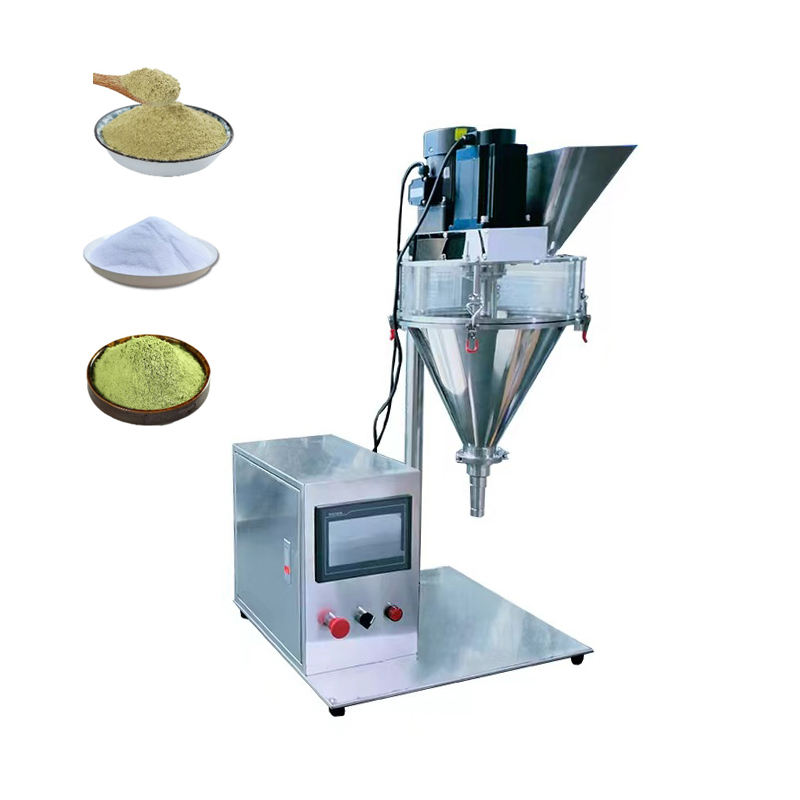
For most free-flowing and semi-free-flowing powders, the industry standard is the auger filler. A rotating screw inside a funnel meters a precise volume of product per revolution; a brake servo stops the screw cleanly at the target count.
What this means practically:
- Fill weight is set by screw revolutions, not by time or flow rate — so it is repeatable across shifts.
- Product density changes affect weight, which is why a good filler is paired with a load cell or check-weigher feedback loop on higher-spec lines.
- Different auger tooling suits different powders — fine, aeratable powder (milk powder, flour) behaves completely differently from dense, granular product (salt, sugar, detergent).
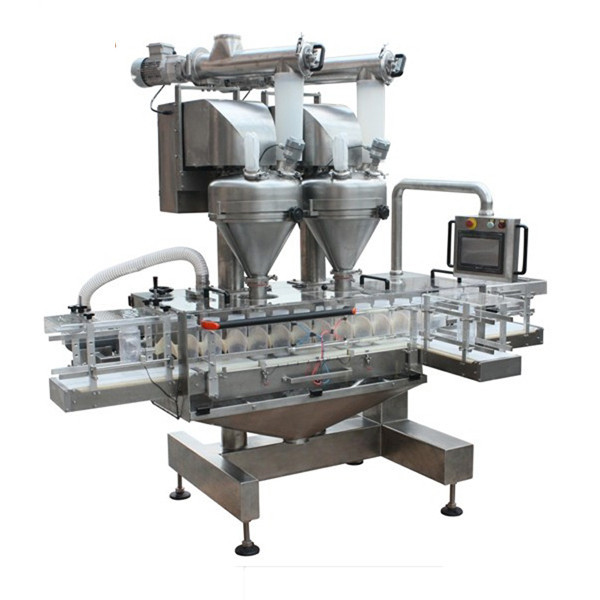
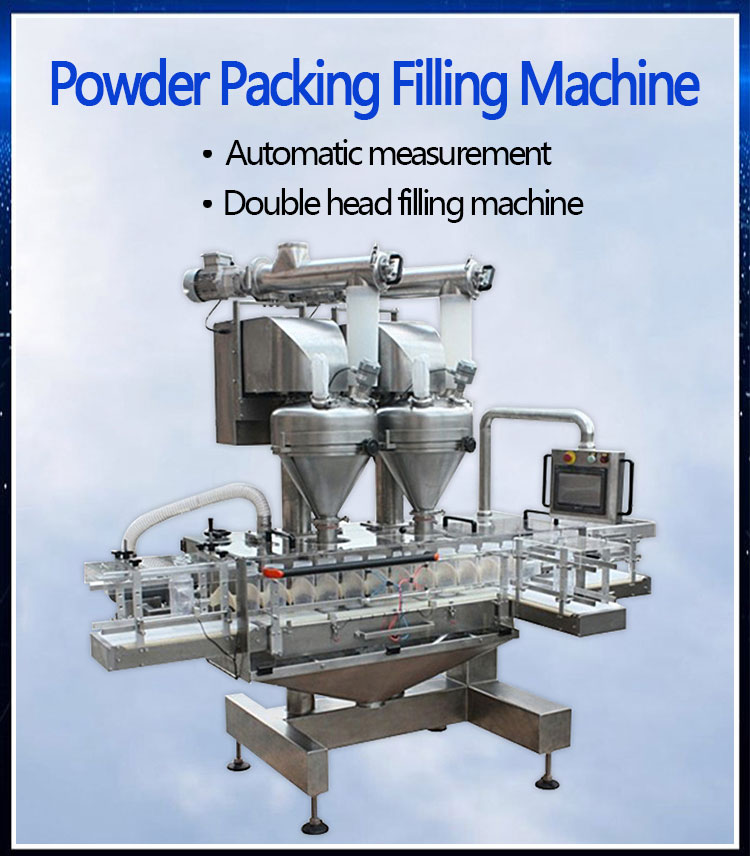
Our auger units for bottle and can applications run a screw-metered dosing system with a 10–5000 g fill range and 10–30 containers per minute, handling container diameters from 50–200 mm and heights from 50–350 mm.
The specs that actually matter
| Spec | Why it matters | What to check before buying |
|---|---|---|
| Fill weight range | A machine sized for 5 kg will be inaccurate at 20 g | Confirm your lightest and heaviest SKU, not just the average |
| Accuracy at your target weight | Accuracy is usually quoted at a specific weight, not across the range | Ask for the tolerance at your fill weight — our engineers will confirm the figure for your configuration |
| Container size envelope | Changeovers cost downtime | Verify max/min diameter and height — ours covers 50–200 mm dia., 50–350 mm height |
| Dosing method | Auger vs. weigh-belt vs. volumetric cup | Auger suits powders; very dense granules may need a multi-head weigher |
| Speed at accuracy | Peak speed and accurate speed are different numbers | 10–30 containers/min is a realistic sustained figure for screw dosing |
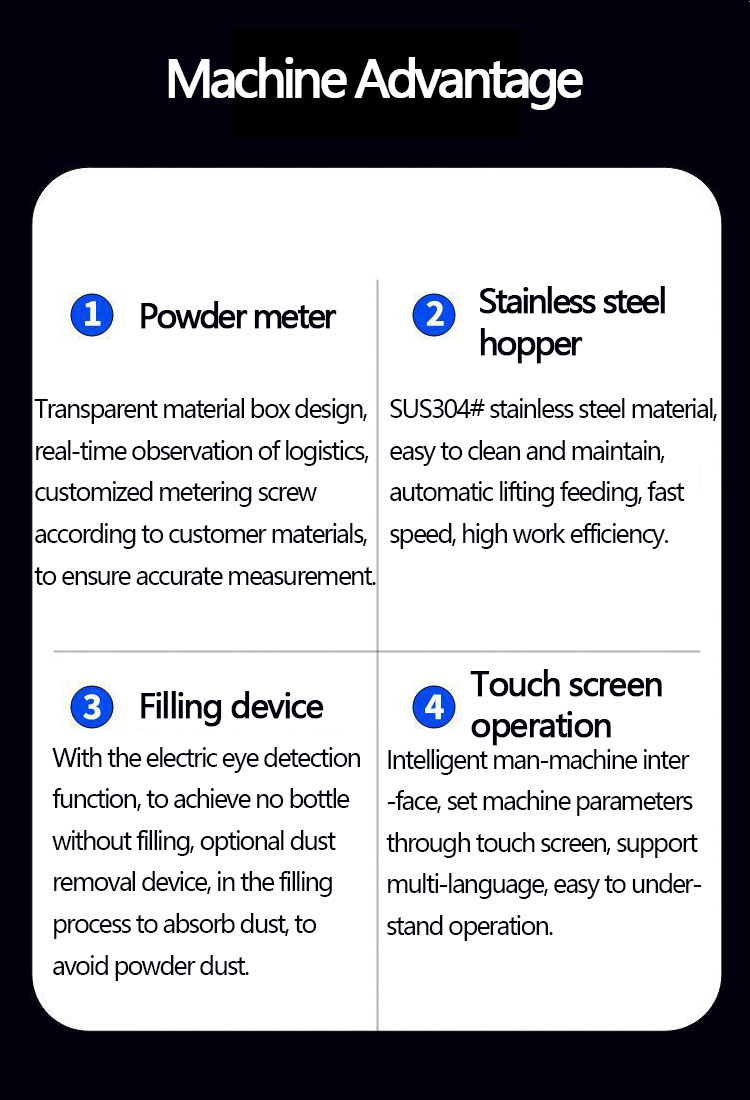
| Dust control | Affects operator health, product loss, and seal quality | Look for enclosed filling heads and extraction ports |
| Changeover time | Multi-SKU plants change format daily | Ask how long an auger + funnel swap actually takes |
| Contact parts & cleaning | Food/pharma requires documented clean-down | Confirm SS304/SS316 contact parts and tool-free strip-down |
Typical applications
This configuration is used across:
- Food & beverage — milk powder, protein powder, flour, spices, seasoning blends, coffee, cocoa
- Chemical & industrial — detergent powder, pigment powder, additives, fertiliser blends
- Pharmaceutical & nutraceutical — powdered supplements, excipients (requires upgraded contact parts and documentation)
The 10–5000 g range covers everything from single-serve sachets up to bulk catering packs, which is why the same base machine often serves both a startup's first SKU and an established plant's seasonal line.
Common mistakes when buying
- Buying to peak speed. A filler rated at 30/min is a different machine from one that holds accuracy at 30/min. Test with your product, not with a substitute.
- Ignoring the container. A powder filler that handles a 50 mm vial may not stabilise a 200 mm wide-mouth jar without a change part.
- No dust extraction. Fine powder escapes during filling, settles on the sealing area, and causes seal failures downstream — the most common hidden cost.
- Skipping the sample test. Reputable manufacturers will run your powder and return a video plus weighment report before you commit.
See it running
A short clip of the machine in operation — the same base configuration described above, filling into glass jars:
Ready to spec a powder filler for your product? Tell us your material, container, and target output — our engineers reply within 12 hours with a configuration proposal and price range. Get a Quote →
คำถามที่พบบ่อย
What fill weight range does an auger filler cover?
Our bottle and can auger units cover 10–5000 g, with container diameters of 50–200 mm and heights of 50–350 mm.
How fast can it run?
Realistically 10–30 containers per minute, depending on fill weight, powder flow characteristics and container handling.
Can one machine handle both fine powder and granules?
Usually not at optimal accuracy — fine, aeratable powders need different auger tooling and funnel geometry than dense free-flowing granules. Tell us your product list and we will specify the right dosing setup.
What about warranty and support?
1-year warranty on the machine with 1-year coverage on core components, plus a machinery test report supplied before shipment.
เครื่องจักรที่เกี่ยวข้อง
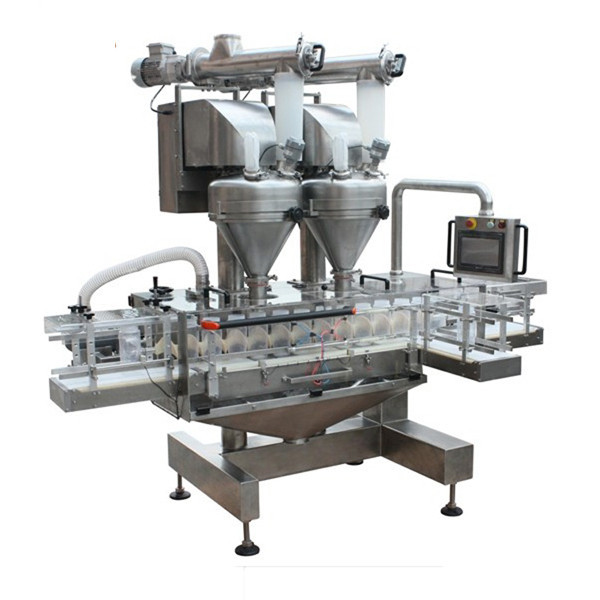
การบรรจุขวดแบบปลายสองด้านคุณภาพสูง
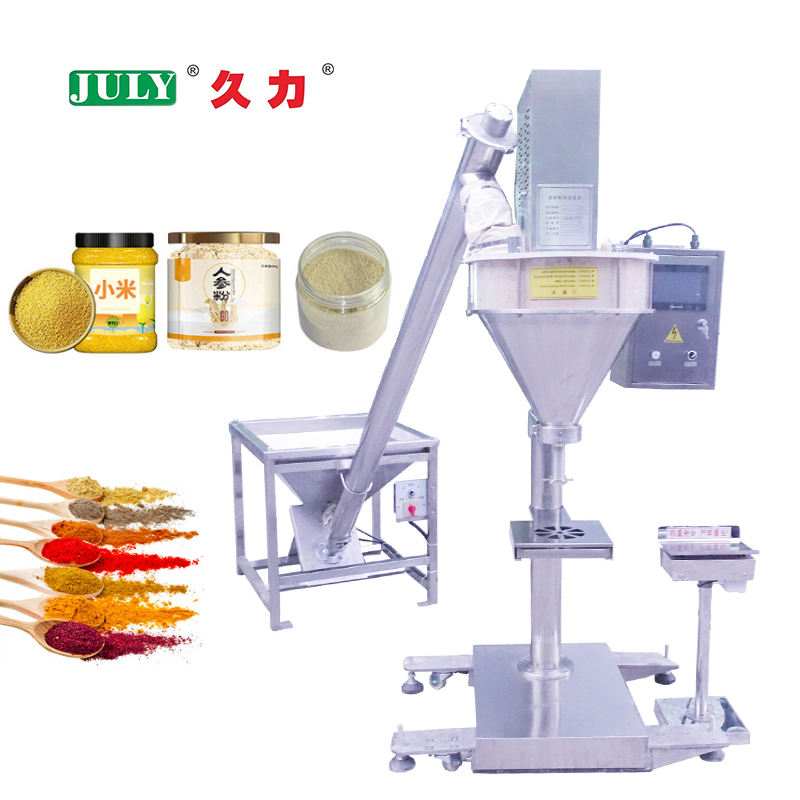
บรรจุภัณฑ์บรรจุผงน้ําหนัก 10g 5000g
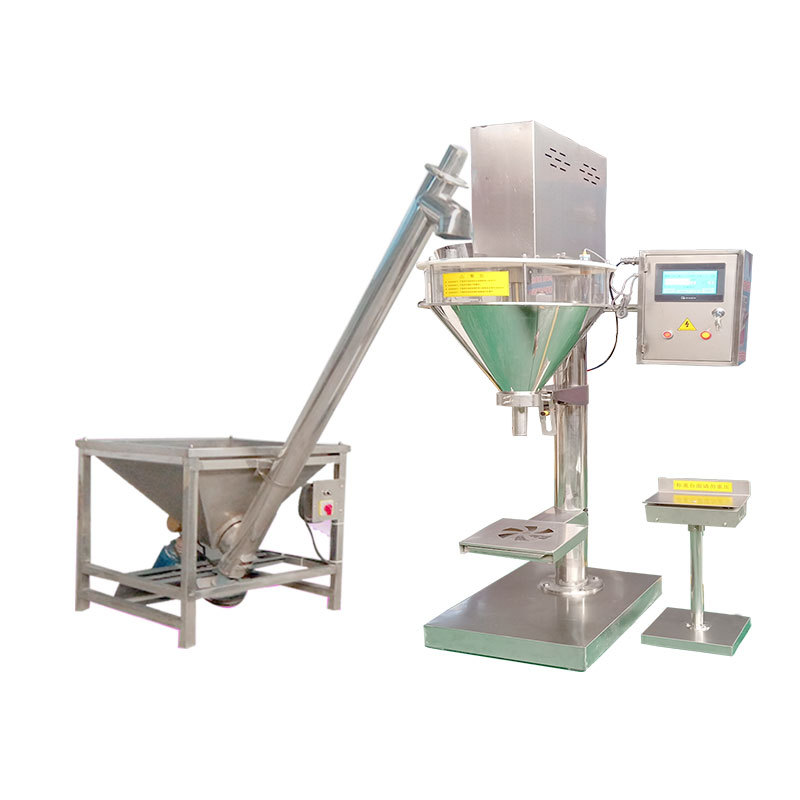
เครื่องบรรจุผงอัตโนมัติแนวตั้ง